what does overpopulation have to do with climate change
Human Population Growth and Climate Modify
The largest single threat to the ecology and biodiversity of the planet in the decades to come will be global climate disruption due to the buildup of man-generated greenhouse gases in the temper. People around the earth are kickoff to address the problem by reducing their carbon footprint through less consumption and improve engineering. But unsustainable human being population growth can overwhelm those efforts, leading us to conclude that we non simply need smaller footprints, but fewer feet.
Portland, Oregon, for case, decreased its combined per-capita residential free energy and car driving carbon footprint past v percent between 2000 and 2005. During this same period, however, its populationgrew by 8 percent.
A 2009 study of the relationship between population growth and global warming adamant that the "carbon legacy" of merely i child can produce 20 times more greenhouse gas than a person will salvage by driving a high-mileage car, recycling, using energy-efficient appliances and light bulbs, etc. Each kid built-in in the United States will add about ix,441 metric tons of carbon dioxide to the carbon legacy of an average parent. The written report concludes, "Clearly, the potential savings from reduced reproduction are huge compared to the savings that can be achieved by changes in lifestyle."
I of the study's authors, Paul Murtaugh, warned that: "In discussions about climatic change, we tend to focus on the carbon emissions of an private over his or her lifetime. Those are of import issues and information technology'due south essential that they should be considered. But an added challenge facing us is continuing population growth and increasing global consumption of resources. . . . Future growth amplifies the consequences of people's reproductive choices today, the same fashion that chemical compound involvement amplifies a banking company balance."

The size of the carbon legacy is closely tied to consumption patterns. Under current conditions, a child born in the United States will be responsible for most vii times the carbon emissions of a kid born in People's republic of china and 168 times the impact of a kid born in Bangladesh.
The globalization of the world economic system, moreover, can mask the true carbon footprint of individual nations. China, for example, recently surpassed the United states to become the world'southward leading greenhouse gas emitter. Merely a large portion of those gases is emitted in the product of consumer goods for the United States and Europe. Thus a large share of "Communist china's" greenhouse gas footprint is actually the displaced footprint of loftier-consumption western nations.
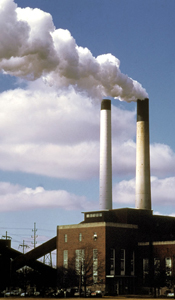
The Us has the largest population in the global n, and is the just high-income nation experiencing meaning population growth: Its population may double before the end of the century. Its 300 million inhabitants produce greenhouse gases at a per-capita rate that is more than double that of Europe, five times the global average, and more than x times the boilerplate of the global south. The U.S. greenhouse gas contribution is driven by a disastrous combination of high population, significant growth, and massive (and rising) consumption levels, and thus far, lack of political volition to end our fossil-fuel addiction.
 More than than half of the U.Due south. population at present lives in motorcar-dependent suburbs. Cumulatively, we bulldoze 3trillion miles each year. The boilerplate miles traveled per capita is increasing chop-chop, and the transportation sector now accounts for one-third of all U.Due south. carbon emissions.
Another one-fifth of U.S. carbon emissions comes from the residential sector. Average habitation sizes have increased dramatically in recent decades, every bit has the accompanying footprint of each home. Suburban sprawl contributes significantly to deforestation, reducing the capacity of the planet to absorb the increased CO2 we emit. Due to a dramatic decrease in household size, from 3.ane persons per abode in 1970 to 2.vi in 2000, homebuilding is outpacing the population growth that is driving it. More than Americans are driving farther to attain bigger homes with higher heating and cooling demands and fewer people per household than always before. All of these trends exacerbate the carbon footprint inherent in the bones energy needs of a burgeoning U.S. population.
Globally, recent research indicates that assumptions regarding declining fertility rates used by the Intergovernmental Panel on Climate Change to develop time to come emissions scenarios may be overly optimistic. While fertility rates have generally declined over the past few decades, progress has slowed in recent years, specially in the global due south, largely due to cutbacks in family planning assistance and political interference from the United states. And even if fertility rates are reduced to below replacement levels, population levels will continue to climb steeply for some time equally people live longer and billions of immature people mature and proceed through their reproductive years. Per-capita greenhouse gas emissions may drop, but the population bulge will continue to contribute to a dangerous increase in greenhouse gases in the atmosphere.
Time is curt, but it is not too late to finish the climate crunch. Economy-broad reduction of greenhouse gas emissions to a level that brings atmospheric CO2 back from 386 parts per million to 350 or less, scaling back global north consumption patterns, and long-term population reduction to ecologically sustainable levels volition solve the climate change crisis and motion us to toward a healthier, more stable, postal service-fossil fuel, postal service-growth addicted society.
Source: https://www.biologicaldiversity.org/programs/population_and_sustainability/climate/
0 Response to "what does overpopulation have to do with climate change"
Publicar un comentario